


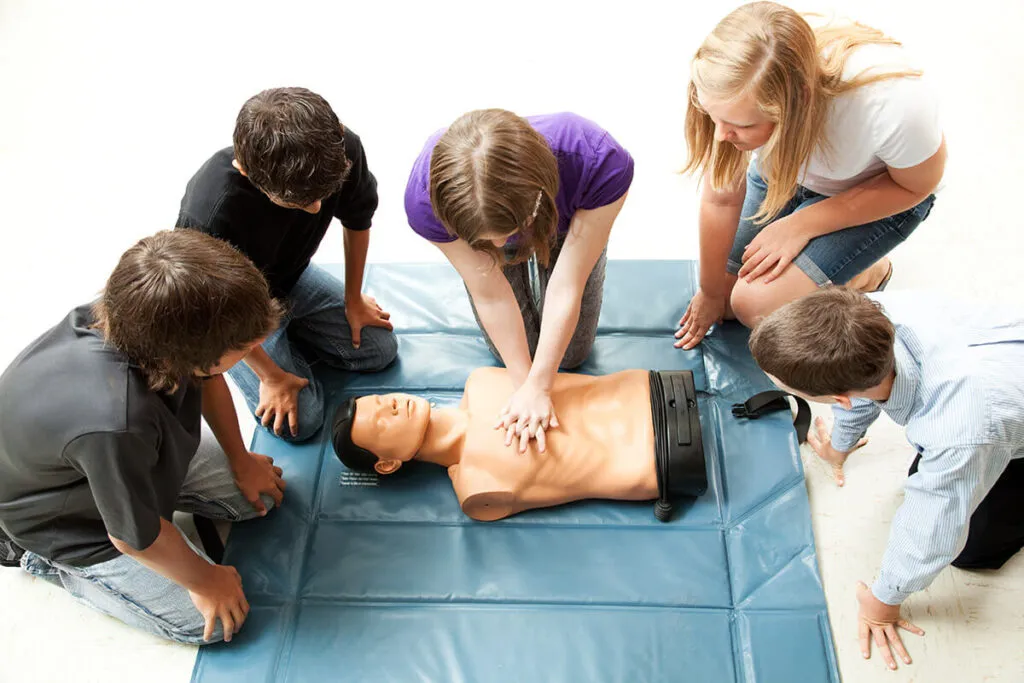
CPR is when you deliver chest compressions to restore blood flow in someone whose heart has stopped beating. Schools bring together many people daily, and medical emergencies can happen on campuses without warning. Staff members, coaches, and older students are often the first people on the scene before paramedics arrive. Here is how to incorporate CPR training in schools:
Add Blended Learning
A blended learning path pairs online coursework with an in-person skills session, giving staff and students a flexible way to complete foundational material. Online modules allow learners to study independently before a skills check, so in-person time focuses on practice. This approach works well for schools where staff schedules vary or if part-time employees attend campus on rotating days. Once the online portion wraps up, the in-person session can move directly into hands-on certification. Schools with multiple campuses benefit from this format; it helps reduce the number of full-day sessions needed. Blended delivery broadens participation without requiring a single large gathering.
Train School Staff
Teachers, coaches, front office staff, and safety supervisors may be the school employees who benefit most from hands-on CPR instruction. A trained staff member responds faster than other bystanders and with greater accuracy when the situation demands immediate action. Emergency response preparation goes beyond a one-time certification class. Staff members who practice on mannequins and work through real response scenarios can build a response pattern that holds up under pressure. After your staff completes training, those skills stay active through scheduled annual refreshers.
School-wide readiness develops when a broad portion of your team holds current certification. CPR fits into existing school safety planning alongside fire drills and lockdown procedures. Additional training keeps skills current, so your campus maintains a consistent level of preparedness throughout the school year. Scheduling renewals before the start of each school year places trained personnel in position from day one. It allows your campus to open each term with a fully prepared team.
Teach Student Groups
Bringing CPR education to students adds another layer of preparedness across your campus. Here are a few things that student training helps cover across different grade levels:
- Grade-level targeting: High school students can complete full skills-based instruction, and some middle schoolers work better with demonstration-led sessions.
- Age-appropriate instruction: Younger learners respond well to guided practice rather than lecture-heavy formats.
- Skill retention through demonstration: Students who physically perform compressions are able to retain the technique longer than those who only observe.
- Health program integration: CPR education fits naturally into physical education or health classes without a separate program structure.
- Campus preparedness: Student training places certified individuals at school events and after-school activities where staff coverage is lower.
Schedule Onsite Classes
Onsite CPR classes bring a certified instructor directly to your campus, removing the logistical challenge of transporting large groups offsite. Your staff trains together in a familiar environment, and hands-on practice happens in spaces your team already uses. Private sessions may align with your academic calendar so training does not compete with class schedules or exam periods. This format also supports a district-wide rollout, allowing multiple campuses to schedule sessions in sequence without major disruption.
Strengthen School CPR Programs
Building a prepared school community starts with one scheduled training session. Onsite group classes, blended learning formats, and AHA-authorized instruction provide varied forms of instruction that can fit around your school’s calendar and structure. Your staff and students can learn practical skills and be ready to apply them if emergency situations arise. Learning these techniques allows students and staff to act without delay during emergencies, and they are able to perform CPR as they wait for medical teams to arrive. Contact a certified CPR training provider today to schedule your campus session.
