


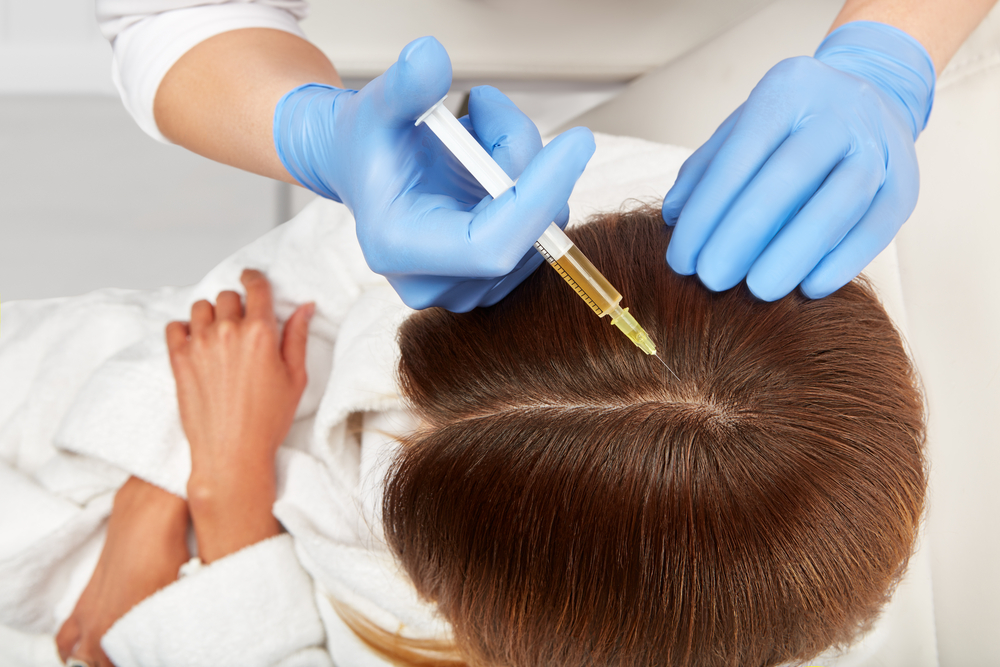
Platelet-rich plasma (PRP) therapy uses your own blood, and it can be used to address thinning hair. The treatment targets weakened follicles, and it draws on components your body already produces. Since the process relies on your own biology, many people explore it before trying more invasive options. Here is more information on PRP for hair loss and the science behind this process:
High Concentrations of Platelets
Platelets are tiny cells that help your blood clot. The centrifuge separates them from other blood components, and this step raises their concentration significantly. When a provider injects this platelet-rich portion into your scalp, the platelets gather where follicles need support.
A standard sample holds a baseline number of platelets. PRP concentrates them several times higher, and the boosted count is what defines the therapy. Since the platelets come from your body, the sample carries no foreign material. PRP for hair loss relies on these concentrations.
Helpful Growth Factors and Cytokines
Platelets store proteins that signal cells to act. These include growth factors and cytokines, and both aid in tissue repair. When platelets release these proteins, nearby cells receive instructions to respond. Cytokines work alongside these proteins, and they help coordinate cell communication.
Several growth factors appear in concentrated plasma:
- Platelet-derived growth factor (PDGF) supports cell division
- Vascular endothelial growth factor (VEGF) relates to blood vessel formation
- Epidermal growth factor (EGF) signals cell growth
Stimulated Hair Growth
Hair follicles cycle through growth and rest phases. Medical providers know how PRP influences these phases, and the concentrated proteins appear to target follicle activity. The goal is to prompt resting follicles toward a growth phase.
Blood supply is a significant factor for follicle function. Growth factors linked to blood vessel formation may support circulation around follicles, and steady circulation delivers nutrients. When follicles receive nutrients, they have the resources they need to produce hair.
Follicle size also plays a part in hair thickness. Miniaturized follicles produce finer strands, and PRP is being used to affect follicle dimensions. Since responses vary between individuals, providers track progress over multiple sessions.
Reduced Hair Loss
Hair loss typically follows follicle miniaturization over time. PRP is used to slow this shrinking process, and the proteins in plasma sit at the center of this approach. Steady follicle support may help strands stay in place longer.
Timing shapes the results people notice. Providers typically schedule a series of sessions spaced weeks apart, and maintenance appointments may follow. Since each scalp responds differently, your provider will map a schedule around your assessment. This treatment aims to:
- Stimulate hair follicle activity and promote natural hair growth.
- Support blood circulation to nourish scalp and hair roots.
- Deliver growth factors to strengthen thinning or weakened hair.
- Slow down hair follicle shrinkage, prolonging the hair growth cycle.
- Encourage thicker and healthier hair strands over time.
Schedule PRP for Hair Loss
PRP therapy draws on platelets, growth factors, and cytokines from your own blood. The science centers on concentration and local signaling, and researchers continue to study how these components affect follicles. A consultation gives you clear next steps, and a medical professional will assess your scalp, explain the process, and answer your questions about safety. Contact a clinic today to book your personalized PRP consultation.
