


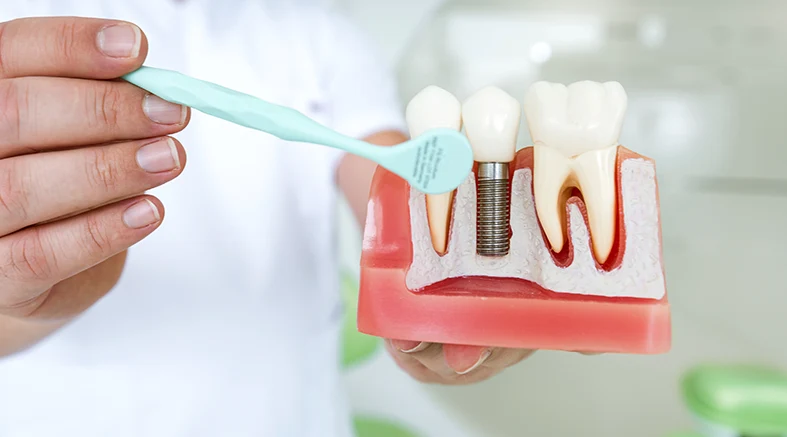
Losing a tooth changes how your mouth works. It can affect chewing, cleaning, and bite balance over time. You will learn what happens first, so you understand how tooth replacement words. When a damaged tooth cannot be saved, extraction starts the process.
Careful Extraction and Preparation
The first step is removing the damaged tooth, which is done with tools designed to minimize discomfort. Steps can include:
- The dentist carefully extracts the tooth to protect the bone and gum.
- Your dentist will thoroughly numb the area.
- The dental team thoroughly cleans the site to reduce the risk of infection and support healing.
- Your dentist reviews the socket to check that no fragments or infection remain.
- The team will check in with you to check comfort level.
After extraction, attention shifts to preparation and bone health. Assessing jawbone strength matters, because it provides the foundation for implants. Some people have enough bone to start the implant process right away, while others need time for healing. Your dentist will select the best graft material for your tooth replacement, so you know what to expect. Proper preparation supports long-term stability.
Precise Implant and Healing
The specialist will get the site ready, and the dental implant is placed into the jawbone with exact positioning. The implant serves as an artificial tooth root, providing a strong anchor for the replacement tooth. Before placing the implant, your dentist will use local anesthesia and might use imaging to check the site and make sure it’s placed correctly. Precise alignment shapes how the new tooth will function. The implant itself may be a titanium post, selected for strength and compatibility with bone.
After placing the implant, the dentist closes the area. Then the healing phase begins. Healing time may vary, usually a few months, depending on bone quality and other health factors. Some people need a little more or less time. During this phase, your dentist schedules regular check-ups. They will monitor for signs of infection, implant movement, or delayed healing. The dentist might take X-rays, and they confirm that the implant is integrating as expected. Careful monitoring helps the dental team identify and address issues early. This contributes to the overall success of the treatment.
Final Abutment and Restoration
The dentist places the abutment, and this is a minor procedure. Your dentist exposes the top of the implant, and they secure the abutment. This connects the implant to the artificial tooth. Your dentist makes sure that the abutment is stable, and they check that the gum tissue fits snugly. Sometimes, your dentist uses a healing cap to shape the gum for a more natural look. Once healing is complete, your dentist takes detailed impressions. This process aids a proper fit and accurate color matching. The dentist may cement or screw the artificial tooth, also called a crown, onto the abutment. Your dentist checks placement carefully, and they make adjustments for comfort and bite alignment.
Next Steps for Tooth Replacement
Tooth replacement after extraction follows a sequence. Each stage supports the next, and each serves a practical purpose in the overall result. If you need to replace a tooth, ask your dentist to explain the full treatment sequence. Review whether grafting is needed, how long healing takes, and when the final tooth can be placed. Clear planning helps you understand the process, so prepare for each visit.
