


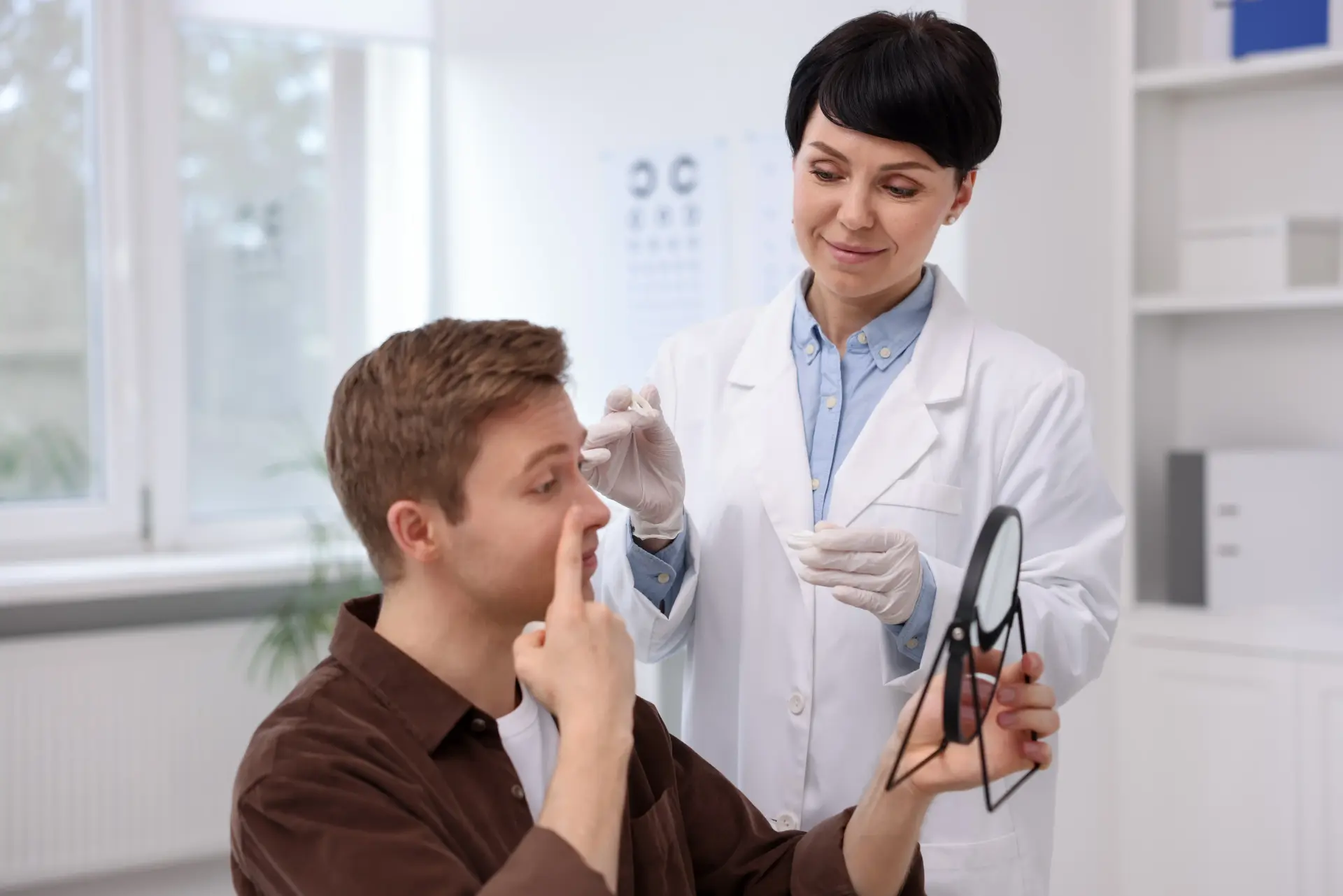
Healthy eyes depend on proper care and consistent habits when you wear contact lenses. Contact lenses provide clear vision and convenience, but problems with cleaning, fit, or daily use may affect eye comfort. Since an eye doctor offers guidance on contact lens care, patients are able to protect their vision and maintain a safer wearing experience. Here are some ways an eye doctor helps with contact health:
Custom Measurements
Contact lenses sit directly on your eye, so the fit has to match the shape of your cornea. An eye doctor measures the curve, diameter, and surface of each eye to find lenses that align with your anatomy. These numbers differ from the values used for glasses, which is why a glasses prescription does not transfer to contacts. A lens that is too flat or steep may trap debris or rub against the eye.
During a fitting, the doctor places trial lenses and watches how they settle. They check:
- Centering
- Movement during a blink
- The gap between the lens edge and the eye
If something looks off, they adjust the parameters and try again. This step-by-step process produces a set of measurements that the doctor records for future orders. With accurate numbers on file, your lenses arrive ready to match your eyes, and they provide a fit based on your needs rather than a general size.
Tear Film Evaluation
Your tear film is the thin layer of moisture that coats the front of your eye and helps keep a contact lens comfortable throughout the day. An eye doctor evaluates this layer, and they see whether your eyes produce enough tears and whether they stay stable between blinks. When tear film breaks down quickly, lenses may feel dry, gritty, or hard to wear by the afternoon.
To check your tear film, the doctor measures how long your tears last after a blink and inspects the glands along your eyelids. They look at the quality of the tears, not just the quantity. Based on their findings, they can match you with a lens material and replacement schedule that suit your tear chemistry. Some materials hold moisture differently, and a wearer with a thin tear film often does better with a lens designed for that situation. This evaluation also flags conditions like dry eye that affect how long you wear lenses each day.
Prescription Expiration
Contact lens prescriptions come with an expiration date, usually one to two years from the exam. The date exists because your eyes change, and a lens that fit well last year may not fit the same way now. Once a prescription expires, suppliers should not fill new orders until you renew it. An eye doctor manages this renewal through a follow-up exam. They recheck your measurements, look at the surface of your eye, and confirm the lenses still sit correctly. If your prescription has shifted or a lens has caused irritation, they will update the details before you reorder. This gives the doctor a chance to catch small problems early, such as redness or minor surface changes that you might not notice on your own.
Visit an Eye Doctor
An eye doctor handles the measurements, tear film checks, and prescription updates that contact lens wear depends on. Each step builds on the last, from the first fitting to every renewal that follows. Regular visits let the doctor track changes and adjust your lenses as your eyes shift over time. If you wear contacts or plan to start, schedule an appointment with an eye doctor today.
