


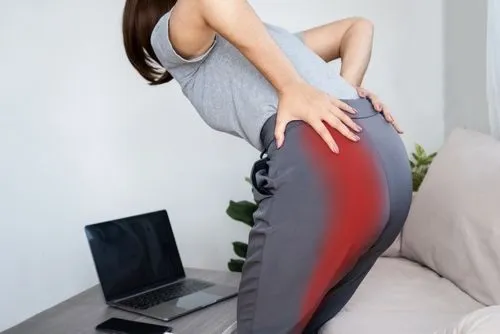
Sciatica refers to pain, tingling, or numbness that follows the path of the sciatic nerve from the lower back into the buttock. It often occurs when a nerve root in the lumbar spine becomes irritated or compressed. The condition can develop gradually, and it may worsen without treatment. Here is some information about sciatica diagnosis and treatment options:
Completing a Physical Exam
A physical exam helps a clinician identify patterns that match sciatic nerve irritation. The visit often begins with questions about where the pain travels, when it started, and what worsens it. During the exam, the clinician may check:
- Posture
- Walking pattern
- Reflexes
- Muscle strength
- Sensation in the legs
A straight leg raise test is also common. While you lie on your back, the clinician raises one leg to see whether the movement triggers pain that travels below the knee. Results are often compared between both legs to assess asymmetry, and this helps determine whether nerve irritation is present on one side.
Undergoing Diagnostic Imaging
Diagnostic imaging plays a key role in identifying the underlying causes of back pain and related symptoms. Doctors often recommend imaging when sciatica becomes severe or physical exams are inconclusive. Some imaging tests include:
- X-rays: These are often the first tool used to evaluate back pain, as they provide a quick way to visualize bones and identify abnormalities or fractures. X-rays also help determine whether an underlying bone or joint problem is causing the pain.
- MRI scans: These use powerful magnets and radio waves to produce detailed images of soft tissues, such as muscles and nerves. It’s useful in detecting herniated discs, spinal cord injuries, and other soft tissue problems that may not show up on an X-ray.
- CT scans: These use a series of X-rays to create cross-sectional images of the body. They evaluate back pain when more detail is needed than a traditional X-ray can provide.
Reviewing Non-Invasive Treatments
For sciatica, non-invasive treatment usually focuses on reducing nerve irritation and improving daily function. The plan depends on the root cause of symptoms and their duration. Primary treatments include physical therapy or at-home activity modifications. Physical therapy provides guided stretching, core strengthening, hip mobility work, and posture training. A person whose pain worsens after sitting at a desk may learn lumbar support positioning and nerve-gliding exercises. Activity changes include avoiding positions that increase pain, and short walks and position changes help reduce stiffness and maintain circulation.
Medications may include anti-inflammatory drugs or nerve-related pain medications, depending on the patient and clinician judgment. Some patients receive epidural steroid injections when inflammation around a nerve root is suspected. These injections are performed with imaging guidance, and they are used as part of a broader care plan, not as a stand-alone cure.
Understanding Surgical Options
Surgical treatments are reviewed when other methods have not provided sufficient relief or when specific conditions require immediate intervention. The exact procedure depends on the source of nerve compression. A microdiscectomy removes the portion of a herniated disc pressing on a nerve root, while a laminectomy removes part of the vertebral bone to create more room in the spinal canal. In some cases, spinal fusion is used when instability, deformity, or severe degenerative change is present.
Learn More About Sciatica
Sciatica can range from mild discomfort to significant, persistent pain, and its effective management depends on identifying the underlying cause. A physical exam and diagnostic imaging help clinicians confirm the source of nerve irritation and guide treatment decisions. Many people improve with non-invasive approaches such as physical therapy and medications. When symptoms are severe, surgical options may be recommended to restore function. Contact a spine doctor today to schedule a comprehensive back pain evaluation.
