


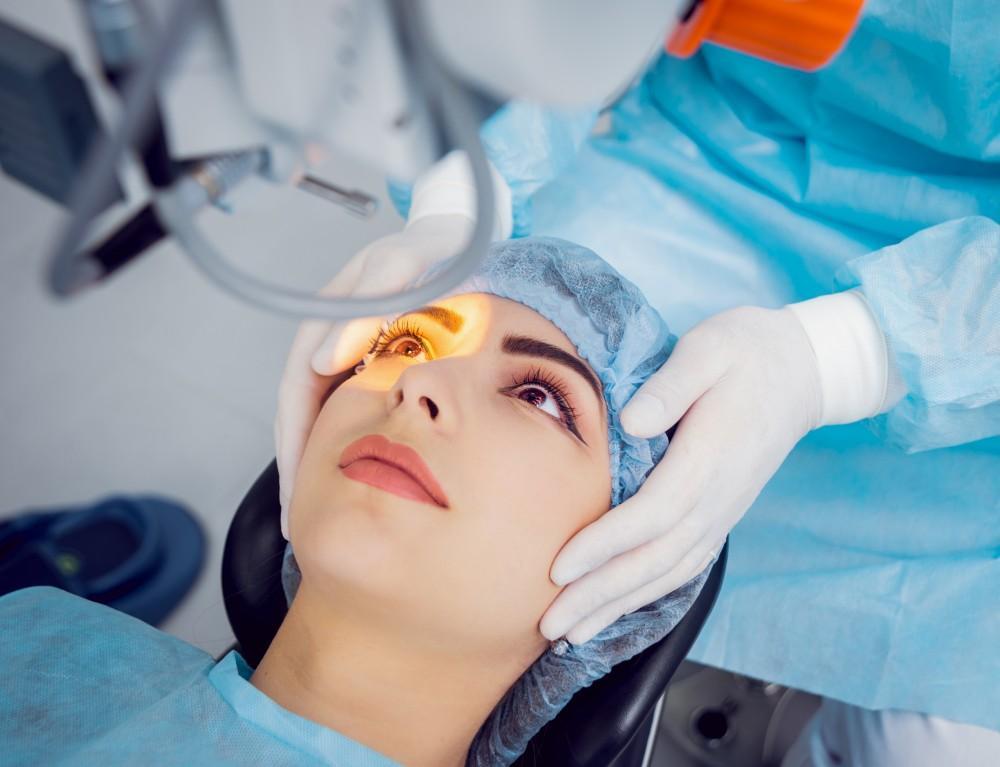
Laser eye surgery is planned through a detailed eye examination that measures how the eye focuses light and identifies the source of vision error. Doctors evaluate whether blurred vision is caused by refractive issues in the cornea, lens, or overall eye length, and determine whether the cornea is suitable for reshaping. Here is what to ask your doctor before undergoing laser surgery:
What Tests Determine Eligibility?
Laser eye surgery suitability begins with identifying the type of refractive error affecting vision. Myopia causes blurred distance vision when light focuses in front of the retina and is often associated with an eye that is longer than average. Hyperopia reduces near vision because light focuses behind the retina; this makes close tasks such as reading more difficult.
Astigmatism produces distorted or uneven vision due to an irregular corneal shape. Presbyopia develops with age as the natural lens loses flexibility, which reduces the ability to focus on near objects. These conditions form the core refractive errors evaluated for laser vision correction. Corneal shape plays a central role in how the eye focuses light.
A regular cornea produces a more uniform focus of light on the retina, while an irregular cornea scatters or distorts incoming light, which degrades visual clarity. Corneal irregularities and related conditions are reviewed during eligibility screening for laser vision correction. An evaluation focuses on corneal refractive characteristics and how effectively the cornea directs light onto the retina.
How Do LASIK, PRK, and ICL Differ?
Laser-assisted in situ keratomileusis (LASIK) reshapes the cornea with a laser to improve how light focuses on the retina. A thin flap is created on the corneal surface, and the underlying tissue is reshaped to correct refractive error. The flap is then repositioned and secured, where it heals naturally without stitches. Vision improvement results from the altered corneal curvature rather than changes to internal eye structures.
Photorefractive keratectomy (PRK) removes the cornea’s outer epithelial layer before reshaping the exposed surface with a laser. The epithelium regenerates over several days, restoring the protective surface while the new corneal shape stabilizes. This technique modifies how the front of the eye refracts light without creating a corneal flap or altering deeper layers. Implantable Collamer Lens (ICL) correction involves placing a biocompatible lens inside the eye to improve focusing power. The lens sits behind the iris and in front of the natural lens. It redirects incoming light onto the retina without reshaping the cornea or removing tissue.
Which Procedure Best Fits Your Eyes?
Suitability for vision correction depends on how refractive error affects everyday visual tasks. Distance-focused activities, such as driving or watching screens, rely on stable far vision; near work, like reading or fine motor tasks, depends more on close focusing ability. These differences help explain how vision problems affect daily functioning and how clinicians evaluate them during laser surgery assessments.
Patterns of visual demand also help guide discussions about appropriate correction options. Dry eye affects both comfort and visual stability during routine activities. Symptoms fluctuate with the environment, screen exposure, and time of day.
Tear film quality influences how smoothly light enters the eye, so surface health is evaluated alongside refractive measurements when reviewing treatment suitability. Comfort and ocular surface condition are evaluated together with visual correction goals. All of these elements help your eye doctor select a suitable procedure for your goals.
What Do I Expect Post-Surgery?
Vision improves progressively after laser eye surgery as the cornea heals and stabilizes. In the early recovery period, clarity may fluctuate as the eye adapts to its new refractive shape, and vision continues to refine over time. Mild light sensitivity or glare can appear during this stage, especially in bright or high-contrast settings; it typically settles as healing advances. Post-operative follow-up visits track visual acuity, comfort, and overall eye health. Clinicians monitor healing progress and document improvements in vision and stability over time.
Schedule a Laser Eye Surgery Consultation
Refractive surgery planning is based on detailed diagnostic testing that evaluates how the eye focuses light. Corneal shape and the type of refractive error help determine whether laser vision correction is appropriate. A comprehensive exam with an experienced eye doctor will clarify your options and determine eligibility for laser eye surgery, so schedule an appointment to get started.
