


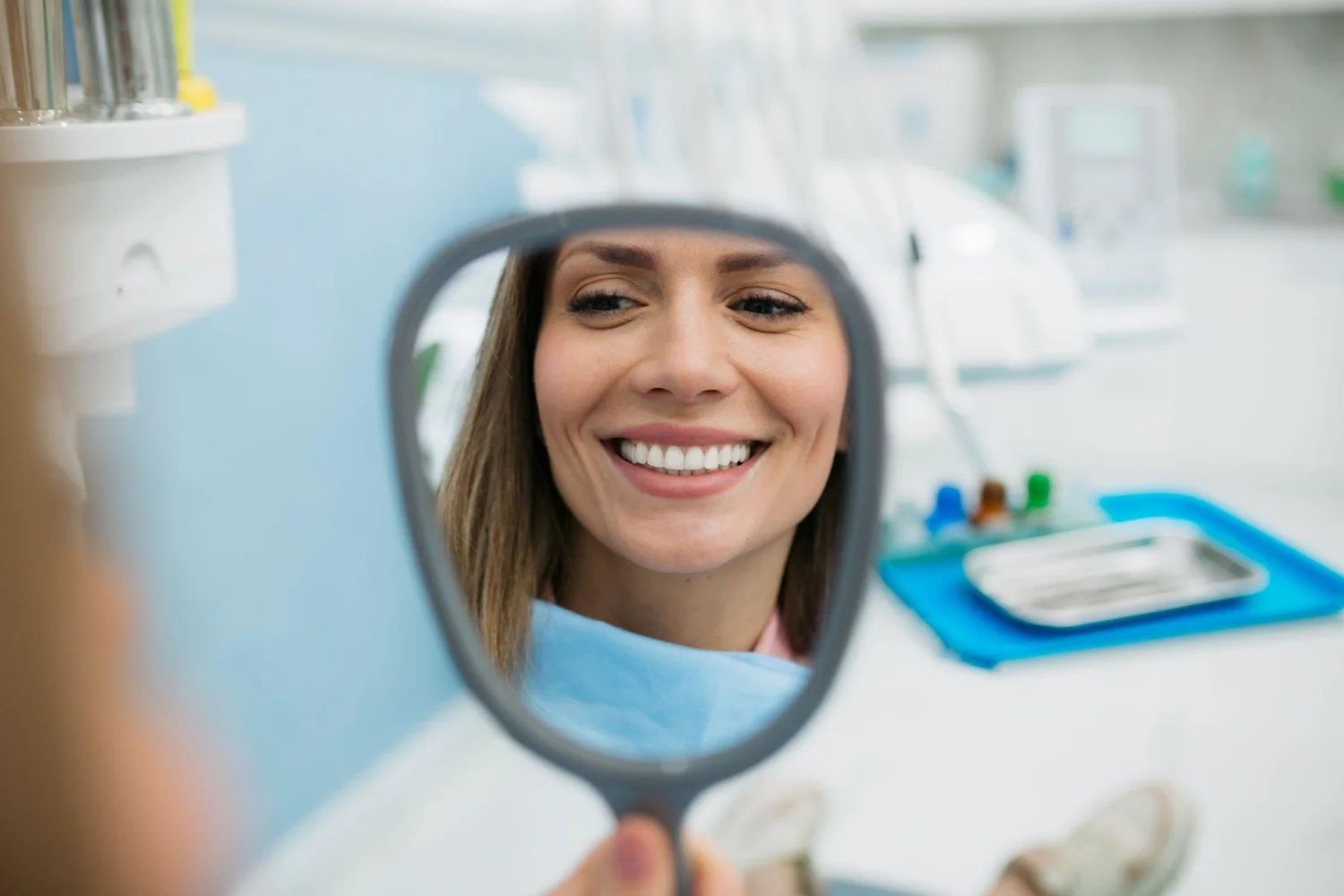
Over time, coffee, tea, and aging naturally discolor human teeth. Professional whitening treatments break down these stains safely, and they restore a more uniform tooth color. While various treatment approaches exist, many follow a structured process to maintain a lighter tooth color. Here are some long-term benefits of teeth whitening treatments:
Reduces Surface and Deep Stains
Teeth have a porous structure, so they absorb colored molecules from food and drink over time. While daily brushing helps remove temporary surface debris, it doesn’t reach molecules trapped beneath the outer layer. Professional whitening solutions penetrate these deeper layers. Active ingredients target accumulated discoloration directly, without altering the tooth’s physical shape.
A standard professional treatment oxidizes deep stains, breaking the chemical bonds that hold the dark colors together. The resulting color shift creates a lasting change in your tooth shade. The underlying dentin usually stays lighter than it would without the clinical treatment, and regular touch-ups maintain a lighter baseline for years.
Dental providers formulate teeth whitening treatments to match the types of stains you have. Depending on your dietary habits, whitening agents can neutralize stains from coffee, red wine, or tobacco. Targeted chemical reactions break down deep stains before they set permanently, and they help limit future stain buildup.
Preserves Enamel Appearance
Your enamel acts as a hard, protective outer shell for the sensitive inner tissues. When they’re properly applied, whitening agents do not erode or weaken tooth enamel. They should pass through the microscopic pores of this shell to reach the darker areas underneath. Dentists also regulate the product concentration to match your specific tolerance. This prevents the soft tissue irritation often associated with unregulated kits. Over-the-counter products may lead to uneven results or increased temperature sensitivity, but professional treatments are applied uniformly on all visible surfaces for a consistent appearance.
Regular monitoring by your dental team helps keep your enamel intact while safely maximizing the brightening effect. Following specific post-treatment instructions reduces the risk of re-staining, and it helps maintain results for a longer period. The long-term appearance of your enamel remains smooth and naturally glossy.
Works With Preventive Dental Care
The whitening process fits into standard preventive care plans designed by your dentist. By first removing hardened plaque and tartar, hygienists prepare your teeth for optimal whitening absorption. Clean surfaces allow the bleaching gel to work evenly without structural interference. The combination of thorough cleanings and strategic whitening sessions creates an effective approach to oral care. After undergoing a whitening procedure, some patients pay closer attention to their daily brushing and flossing routines. Scheduling regular dental appointments helps maintain the results of a whitening treatment, and tracking your teeth’s shade gives dentists another metric to monitor your lifestyle habits.
Learn More About Teeth Whitening
Understanding the benefits of teeth whitening helps you make more informed decisions about your dental care. The procedure targets deep stains while leaving your enamel structure intact. Ongoing communication with your dental team maximizes these long-term results, and it supports the treatment’s effectiveness through continued dental guidance. Schedule a consultation with a dental office today to discuss your specific whitening options.
